Friday, April 19, 2024

The Astutocentaurus, Death, & Utility Vessels

 Death is a very complicated subject for the Astutocentaurini. Since each person is made of four detachable zooids, their constituent living units almost never die at the same time, and the lifespan of each zooid is limited by the slow loss of their ability to exchange nutrients, oxygen, and nerve impulses with advanced age. To complicate things further, the cranial zooid always dies first, which often leaves the headless body alive to either live out the remainder of its life in constant care or starve to death in a fruitless zombie-like search for a replacement head (essentially any small object that radiates heat).

A basic diagram of Trinary Mortality

Such unorthodox physiology has resulted in an unconventional perspective of mortality. Unlike humans, who tend to see life and death as a duality, most Astutocentaurini cultures interpret this cycle as trinary. According to their belief, each person is composed of two interdependent entities, the "self" (the cranial zooid) and the "vessel" (the collective post-cranial zooids). As the name suggests, the self represents the core of a person's consciousness and identity, while the vessel is typically viewed as something along the lines of a mount "ridden" by the former. Due to this, they hold the belief that individuals live one life but experience two deaths: the death of the self ("self-death") and the death of the vessel ("vessel-death"), which can occur either separately or simultaneously depending on the circumstances of the expiration. As mentioned in the first paragraph, however, death of the self typically occurs first when it comes to age-related death, followed much later by death of the vessel. This ideology has many cultural variations, each with its own funerary rights for both the self and the vessel, respectively. In most cases, however, both will typically be buried in the same grave upon passing.

Illustrations outlining the basic types of utility vessels

But how are headless citizens dealt with while still alive? Following self-death, the vessel of an Athyrmatherian has the potential to live for a long time under controlled conditions, anywhere from a year to nearly a century, depending on the creature's species and age. The feudal societies of the world have thus converged on a similar solution: At some point in their adult life, a person will usually be required to sign a will in which they can either decline or agree to posthumously donate their vessels to society. These repurposed vessels are known as "utility vessels."

A utility vessel can be considered an archaic sort of biotechnology, an organic automaton that can be sold and used for various purposes. When awaiting ownership or rental by an employer, they are typically housed and maintained in storage facilities called "body shops," eerily reminiscent of auto shops in their presentation and purpose. They can even be modified surgically and "mechanically" to certain degrees if permitted by a will, although more extensive cases of body modification can be rather controversial. Despite this apparent commoditization, utility vessels are treated with an odd yet palpable sense of respect and reverence, which is culturally analogous to our respect for the dead. Indeed, the very shops they are sold by tend to be subsidiaries of the same funeral homes that house their deceased selves, and employers are legally obligated to return dead vessels so they can be buried in the same graves. With each use, utility vessels are paid in money for their services, and some laws and regulations advise against any particular uses that may be deemed indignant to the former persons. Furthermore, only adult individuals can be made into utility vessels, due to legal stigmas against child labor and exploitation. It is also common for utility vessels to be dressed in lavish and beautiful garbs or intricately carved bioplastic shells that match their cultural backgrounds. The centerpiece of these decorations is a custom-carved "persona," a fake head that, in addition to functioning as a feeding tube, serves as a symbolic reminder of the person the vessel used to be attached to.

Under native legal definitions, utility vessels are usually classified into three types based on their composition and functionality. Type "A" utility vessels consist of the thoracic, upper, and lower abdominal zooids, with the thoracic zooid housing a ganglion that makes them autonomous enough to perform specific tasks in response to certain stimuli. This allows them to haul or carry loads similar to pack animals, with the behaviors being conditioned through rhythmic ground vibrations and rewards of liquid food. Type "B" utility vessels consist of only the upper and lower abdominal zooids, and they lack autonomy outside metabolic regulation and basic righting and balancing. Due to this, they have to be pulled or pushed manually like living carts, and they are mostly used to carry lighter loads or to act as portable bases for more stationary equipment. Type "C" utility vessels are essentially any singular zooid that is separated from a composite, and they are typically relegated to use as a surgery stock for organ transplants, zooid replacements, and sometimes to "construct" more complete utility vessels.

Saturday, January 6, 2024

The Shovelfolk

A male Shovelperson getting ready for some farmwork. Shovels are often passed down as family heirlooms in his culture.

The Shovelfolk (Astutocentaurus alluvium) are a humble and diminutive people native to the Takara Plains. This means they originated from the same homeland as the Fauns, although they come from a much earlier radiation of the genus. It is estimated that the Shovelfolk (or at the very least, the cultural identity of the Shovelfolk) have been around for well over 3.8 million years, and they retain many ancestral traits that are otherwise lost in younger species. Prominent brow ridges and a broad muzzle indicate that they split off from other Astutocentaurus reasonably early on, with little to no gene flow occurring with their contemporary sister species throughout their evolution, save for the Fauns. They also live a lot more conservatively than their other relatives, their societies being wholly tribal and clan-based rather than tribal-feudal, and they likely remained like this for millions of years. They rarely involve themselves in other species' matters, and most of them are content with keeping to themselves in their homeland. For this reason, they are a scarce sight in Tinria or any other mixed-species settlements, and about 81% of their global population lives exclusively in the Takara Plains.

The life of the Shovelfolk is closely associated with the river and the ground beneath their feet. Their species name, alluvium, comes from their apparent close association with the Takara River, as their permanent settlements are often the largest near the river's banks. The name given to them by the other natives, however, comes from the prominence of handmade shovels in their cultures, which they use for both agriculture and to forage for food. Though this name sounds derogatory, the Shovelfolk do not see it this way, as they take pride in their mastery of their namesake tool. Having lived such a way of life for so long has shaped their anatomies in more ways than just retaining primitive characteristics. Unlike the earliest Astutocentaurus, which were plains-dwelling nomads equally capable on both solid ground and in the treetops, the Shovelfolk are semi-fossorial and sedentary, having evolved stouter, more muscular limbs and a smaller body size to allow them to crawl through narrow tunnels, and a slower metabolism that will enable them to tolerate lower oxygen levels when digging particularly deep. They are also rather competent swimmers, which is a valuable trait to have when living in or near bodies of water. They can still climb, but they are rather poorly suited for it compared to their cousins, and being less adept at running, they have doubled down on camouflage, their pelts being decked in black, white, and green stripes to break up their silhouettes in tall grasses. While they don't have thick, strong claws for digging, they compensate with their reasonably liberal use of a wide variety of shovels, and their chin tusks are extra thick and sturdy to allow them to break apart packed, hardened soil and dried mud. Shovelfolk tend to be more crepuscular than their closest relatives, being mostly active in the morning and afternoon while sleeping at midday and midnight. They are also remarkably long-lived by Astutocentaurus standards, with the oldest growing to be 150 years old.


Although their larger snouts give the illusion of a smaller brain, the Shovelfolk are not by any means "less intelligent" than their more derived peers. Like many other cultures, they have both a spoken and written language, and they even have their own systems of measurement. All evidence suggests that their apparently primitive way of life is one they live by choice rather than consequence, and the fact that they retain such an atavistic anatomy is likely a result of this chosen conservatism. In fact, they are actually quite rich in their practices and traditions, and while their cultures are quite similar in their beliefs and values to each other due to their close proximity, they all have their own unique interpretations and versions of these ceremonies. One ceremony of note is the Spring Festival, in which they celebrate a successful growing period with a great party and a live performance to honor their fertility deities. Their technology, while primitive, is still fairly advanced by the standards of their lifestyle. They have managed to discover basic metallurgy fairly early on in their evolution, and often use it to forge tools such as shovel heads and sickles for their crops. They are also known to sift gold from the sediments of the river, which they then melt down to make piercings and jewelry. Metals such as iron are a bit harder to come by in their homeland, so such materials are typically gathered during annual pilgrimages to more metal-rich areas beyond the plains, namely active volcanoes. They also make tools out of plant-based bioplastics like most other advanced cultures, though their particular method is rather unusual. Rather than entirely melting down the plants into a melted plastic soup, they simply hold sticks and stems over an open flame to soften them, subsequently weaving them into shape like a sort of wicker. For their metal tools, they often make grips out of this plastic wicker, cutting cross-hatched marks on the surface for better friction.

A simplified infographic of how Shovelfolk develop their Warrens.

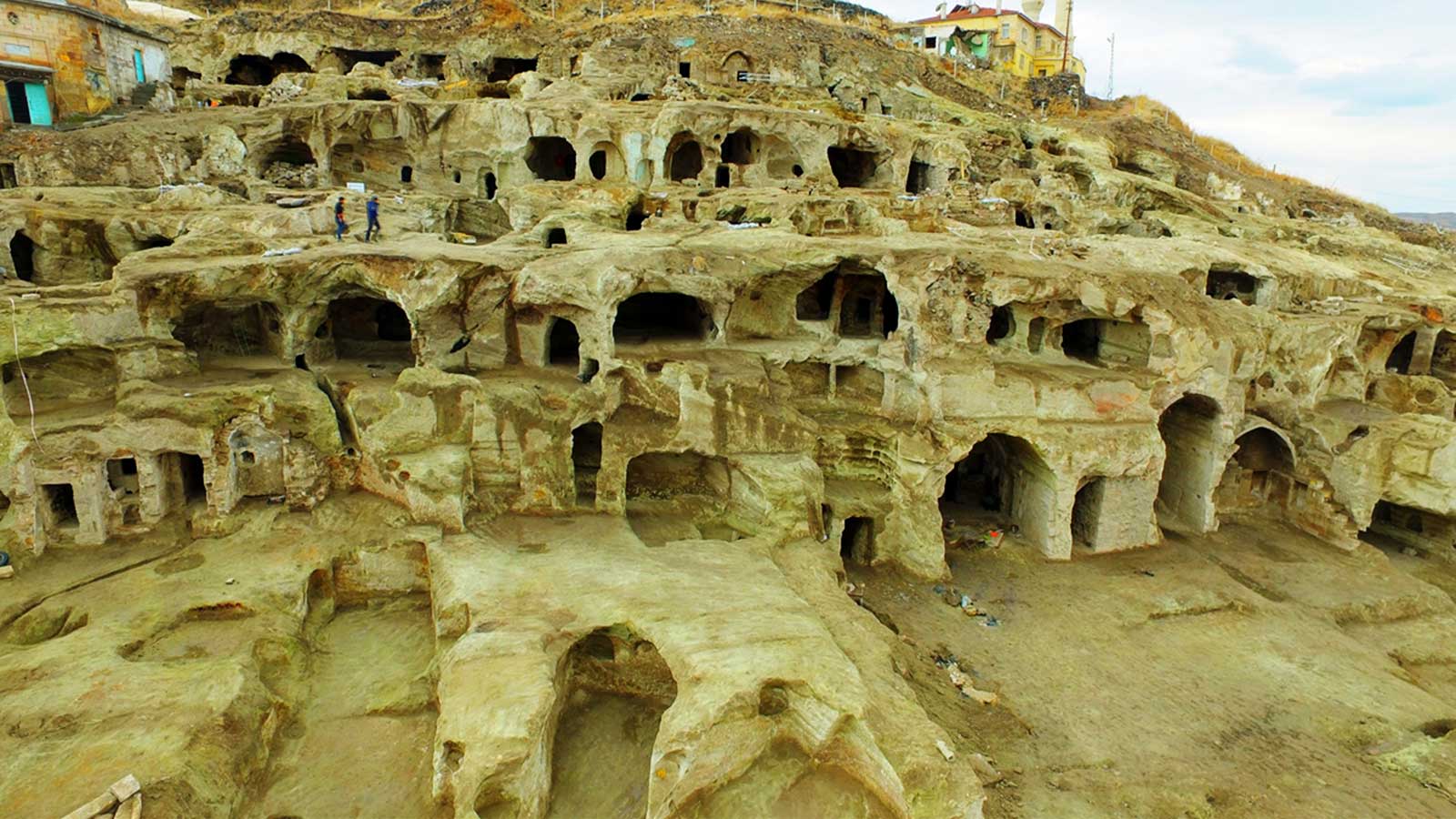
Perhaps the most impressive aspect of the Shovelfolk culture is their architecture. Rather than building their homes above ground using traditional building materials, they quite literally dig and sculpt their homes out of the cliffs and hillsides of their river valley, forming maze-like subterranean communities. These underground villages are called "warrens", and they are rather similar to the underground cities in Cappadocia, Turkey, although rather than working with softer volcanic rock, the Shovelfolk have to bore through shale, limestone, dolomite, and sandstone. Since a warren can take literal centuries or even millennia to build, its size and complexity are often indicative of how old and well-established it is. Younger warrens appear fairly simple, consisting mostly of just small rock-carved cubbies arranged in neat rows, which are accessed via ladders and may or may not be interconnected internally. Older warrens, however, are much more baroque, with most of the vertical cliff being carved away to form elaborately sculpted entrances above ground, which lead to vast underground networks of interconnected rooms that fulfill a wide variety of amenities, including housing, food processing, and even education. Some of them even have living spaces designed to accommodate allied species (more on those guys later.) Not only have the Shovelfolk absolutely mastered their excavating techniques through this process, but they are known to have been building warrens like these since the First Iteration (3.8 MYA), back when they still retained a more lithe, cursorial build. Throughout deep time, they have been building warrens for so long that they have inadvertently terraformed the river valley itself, which has proven to be beneficial to both their descendants and the native wildlife. As older, abandoned warrens get eroded by the sands of time, they form smooth, rocky hills that can easily be scaled on foot, and abandoned underground tunnels are smoothed out to form intricate cave systems. This provides a larger amount of walkable ground for thirsty animals to access the river's drinkable water, and the tunnels (provided that they aren't filled up with dirt), are ideal for hibernating animals to sleep out the winter in. Furthermore, modern Shovelfolk are known to rediscover these fossilized warrens rather frequently, subsequently excavating and refurbishing them to reclaim as their own.

The Shovelfolk are sometimes regarded as the "inventors of agriculture" by the other native sapients. In addition to their surprisingly advanced metallurgic techniques and masonry, they have been farming for over 3 million years, countless eons before most of the other currently extant native sapients even came to be. Quite a few of the planet's most widely used crops, such as the wheat-like réhä used to make bread, are believed to have originally been invented by their people. Shovelfolk are similar to the more cosmopolitan Fauns in that they are omnivores, eating mostly starchy vegetation supplemented by some quantity of meat, eggs, and fruit. Due to the ample supply of water and minerals offered by the Takaran River, most Shovelfolk cultures are almost obligately agricultural, relying on both the running water of the river and the fertile land on the riverbank to grow their own food. Like many Astutocentaurine cultures, of course, there is a conspicuous lack of dairy in the diets of Shovelfolk, since none of the known animals on Athyrmagaia lactate in a mammalian fashion.

To disrupt the local ecosystem as little as possible, the majority of the crops they grow are derived from species native to the area. The most common crops in their daily regimen are réhä and hetūt, the former a grain-like species of star grass and the latter an edible root. Réhä is used in a similar manner as wheat, often being ground up and then baked to make bread, whereas hetūt is more akin to a potato or turnip and can be eaten either raw or cooked. They also use zhėgel, a more primitive, water-intensive plant vaguely similar to sugarcane, to make various simple sweet treats. In addition to terrestrial crops, they also use the mineral-rich waters of the Takara to cultivate various freshwater aquatic plants as a food source. The leaves of zhattrekekc aquaphytes are used in much the same way as the leaves of lettuce, and the seeds of secondarily aquatic hehhel plants are used as a peppercorn-like seasoning.

Although mainly farmers of locally grown produce, Shovelfolk have also been known to forage for food both near and beyond the riverbank, as well as engage in occasional trade with other cultures for more exotic ingredients. During their annual pilgrimages in search of resources, namely the metals found near volcanoes, they often either harvest (or purchase) foreign spices and herbs to bring home, including those used for medicines that cannot be found in their homeland. Those who live near the coasts often travel closer to shore to harvest sea salt as a condiment and a food preservative. When harvesting fruit, which is relatively rare in the Western Weave, they will rely on the help of allied Oliphaunts, since the only plants that bear palatable fruit in the region are enormous umbrynoids that are often too tall for the tiny Shovelfolk to scale on their own.

Unlike many other agricultural peoples, Shovelfolk do not raise livestock for meat. Their primary source of carnal cuisine is a selectively bred species of tumeofauna known locally as "mėbé." Although it is technically an animal, mėbé grows and behaves more like sessile fungi, which means it is considered a "crop" rather than a form of livestock. Mėbé is farmed underground within the warren in a special higher-humidity chamber, where it is kept fed by organic refuse. Mėbé nodes are usually either eaten raw or cooked, and are a common ingredient of more savory Shovelfolk meals. That being said, they do still make ample use of other animal products as food and resources. Their sole livestock animal, the crawpig, regularly lays infertile eggs that are often eaten as a delicacy and used to make dough, and some of their more unusual dishes are given flavor by being boiled in the animal's urine. Shovelfolk are also known to eat fish and insects, and they will often sun-dry worms to eat as a snack.

While the Shovelfolk live mostly outside of greater feudal society, they do have their fair share of alliances in the plains. They have managed to domesticate clawhogs, a species of pig-like Fauxungulate omnivores otherwise known for their foul temperament. They domesticated these creatures not for their meat, but for their keen ability to sniff out food, which has proven essential in foraging, as well as their eggs and urine which are both used in some of their cuisine. Almost in contradiction to their conservative lifestyle, the Shovelfolk have a very open-minded attitude towards other sophonts. They are on very good terms with the Plainers, a tribalistic ethnic group of Fauns that live a predominantly hunter-gatherer lifestyle, and upon meeting human explorers they were very quick to develop their very own English-based creole. Their most notable alliance, however, would likely be that which they formed with the grand Borean oliphaunts, which they tend to live in close association with and hold in high regard. Some of their cultures believe that they are great guardians created to protect their people, while others believe that they are demigods directly descended from their chief deity. Regardless of their perception, it isn't uncommon for Shovelfolk villages to have at least some degree of cohabitation with oliphaunts, with the latter often assisting their smaller comrades in tasks such as agriculture, construction, and even defense against rivals and predators. Unlike the relationship between men and beasts of burden, this is a dynamic that is very much mutual in nature, as both species are almost equally intelligent and directly exchange cultures and ideas with one another. Due to a long lifespan and the abundance of resources near the river, the Shovelfolk are usually pacifists, and they rarely ever declare war. They do construct weapons such as spears and knives, but these are used almost exclusively for self-defense against predators, as well as for hunting during the dry season when agriculture becomes less viable. In the rare cases in which they have declared war, however, they have been known to utilize their Oliphaunt allies as sapient war mounts, with some records even claiming that they would forge giant daggers for the latter to use as melee weapons.

With the Shovelfolk being around for well over 3.8 million years and the Oliphaunts being around even longer than that, not only have both species bore witness to all four previous iterations of societal and technological advancement on Athrymagaia, but both of them are among the very few cultures alive today that actually remember these ancient eras of prosperity, at least to some extent. Their own perception of these events has cemented itself within their cultures in the form of myths and legends, and while there are indeed fictitious elements in these tales, they are without a doubt directly inspired by the real-life setting and atmosphere of these times, as evidenced by the discovery of ancient technofossils that match the descriptions of some objects described in their mythos. For these reasons, scholars from across the continent often seek out these tribes to inquire about their myths, and often debate which elements of their stories can be correlated to real-world events. In particular, their retellings of the downfall of these old civilizations, while obviously dramatized to fantastical levels, have very dark implications about the real-life circumstances of these events.

Related Articles:
  1. TBA

Wednesday, November 8, 2023

Tumeofauna

Cancer is one of the most feared diseases in the natural world, and animals from both Earth and Athyrmagaia are capable of falling victim to it. In short, cancer is an abnormal group of rogue body cells that start to grow and divide at an uncontrollable rate, to the point that it may potentially invade vital organs and kill the organism. Whether it be viral agents, radiation, or even just poor lifestyle choices, cancer can be caused by an innumerable amount of factors. Most cancers by themselves are non-contageous, but unfortunately this isn't always the case. Sometimes, albeit very rarely, a cancer can come to life, gaining the ability to spread between hosts without the aid of a virus. These are known as "clonally transmissible cancers", and they are essentially single-celled parasitic forms of the species they originated from. On Earth, they are known to plague a number of animals, such as dogs, bivalves, and Tasmanian devils. Some can even spread between two different species. In even rarer, more extreme cases, however, a transmissible tumor has the potential to evolve into its own dedicated animal clade. This is speculated to be the case for the myxosporeans, a clade of parasitic cnidarians that show evidence of having evolved from a variety of cnidarian transmissible tumor.

On Athyrmagaia, the most extreme case of this theoretical phenomenon has happened, and to a degree so unprecedented that it seems to defy the very laws of phylogenetics. About 230 MYA, a mass extinction occurred among the Heteropods of the Borea-Comedian landmasses, though the circumstances were unknown for quite a while since there were no indications of any sort of climatic shift that may have caused it. More complete remains from these strata, however, show signs of severe deformity, with various holes, bumps, and growths on the bones that seem to be directly responsible for the animal's deaths. Nearly all of the Heteropod remains from this rock layer, in all growth stages, share these deformities, and the growths themselves resemble a form of bone cancer. It stands to reason that the mass extinction that killed these animals was not caused by a climatic cataclysm (not directly, anyway), but by an extremely aberrant species of single-celled parasitic fauna. This parasite is believed to have originated from a type of Heteropod transmissible cancer that gained the ability to spread between different Heteropod species, speciating into an entirely new clade of aggressive, genetically chimeric parasites by quite literally stealing the homeobox genes and mitochondrial DNA of its hosts through horizontal gene transfer. This extinct family of transmissible Heteropod parasites is now known as "Catastrophically Mutagenic Heteropod Transmissible Tumor" (CMHTT), and while it is still unknown what caused such a malignant tumor to spread to such a catastrophic level, these parasites proved to be so devastating that virtually every single Heteropod in the northern and western hemisphere was wiped out. The sudden loss of megafaunal herbivores and predators resulted in the overgrowth of Olekirkophte flora, pumping the atmosphere full of oxygen to create a high-oxygen environment similar to Earth's Carboniferous Period. This era was called the Neocarbonic, and it lasted for well over 50 million years. These very conditions were what allowed for megacolonial stegospondyls to evolve into the first Athyrmatherians, which were quick to adjust to the lowering oxygen levels as they developed a more complex respiratory system. They, however, were not the only ones who benefited from such conditions. Though the original wave of CMHTT went extinct along with the original megafaunal Heteropods, it quite evidently managed to leave behind a perplexing legacy that would shape nearly all ecosystems to come.

Tumeofauna are an enigmatic, almost anomalous grouping of animals that are found in nearly all habitable regions of Athyrmagaia. As the systematic name implies, Tumeofauna are an offshoot of the same lineage of CMHTT that caused the Borea-Comedian mass extinction event, but they are so extremely derived from their forebears that they are considered a whole new form of animal life of their own. These organisms are very far removed from their carcinogenic ancestors, evolving from mere rogue body cells into multicellular, often colonial heterotrophs and mixotrophs, capable of reproducing independently of a host. Using homeobox genes stolen by their primordial ancestors, Tumeofauna have secondarily re-evolved the ability to form specialized tissues in an organized, non-abnormal manner, and possess a distinguishable body plan and archaic organ systems. Being descended from an HTC lineage, Tumeofauna are technically an aberrant offshoot of Heteropod, though their DNA is extremely chimeric as result of over millions of years of horizontal gene transfer from hosts, with genetic matches to innumerable Heteropod clades both extant and extinct, as well as various phyla of invertebrates, algae and even flora. Some species, most often parasites, even have Athyrmatherian DNA in their genome. Due to this, pinpointing their precise ancestry to any specific Heteropod order, family, or genus is practically impossible. Additionally, modern Tumeofauna also engage in horizontal gene transfer at a regular basis, sometimes with animals and plants, and most often with microbes and other species of Tumeofauna. As a result, their genome is so heavily mixed that it's difficult to determine if Tumeofauna are truly a unified clade or a paraphyletic group of organisms that evolved their current conditions independently from one another.

Typically, a single colony of Tumeofauna is comprised of multiple interconnected, radially symmetrical "nodules", each technically being its own individual animal. At the center of the mass is the central nodule, which branches outward into smaller "child" nodules which are linked together by either a carpet of tissue or a network of "internodular ligaments" where the circulatory and nervous systems of each nodule intertwine. The outside of each node is covered in an epidermis, which is perforated with spiracles that connect to a subdermal network of trachea used to passively respirate atmospheric oxygen. The integument of the epidermis often varies, ranging from bare, moist skin to scale-like plates made of chitin. Similar to fungi, some Tumeofauna protect themselves using toxins produced from glands in the epidermis. Their bodies are lined with layers and bands of of muscle, and most species can be observed visibly convulsing and contracting. Some larger species possess a solid, internal test made of hydroxyapatite, which serves as structural support. A rudimentary, nodular nerve net is scattered across the colony's biomass, which allows it to react and respond to external stimuli, and at the core of the mass is a blood-filled, heart-like hemocoel that branches out into blood vessels and smaller hemocoels across the body tissues. Surrounding the central "blood chamber" are specialized tissues called "factory tissues" that produce stem cells, which are released into the blood stream and distributed across the body as the organism grows. Tumeofauna often lack a proper digestive system, so they instead gain sustenance by absorbing nutrients through permeable, root-like tendrils on the underside. Most Tumeofauna propagate through a very novel form of asexual reproduction. Like a mold, it grows and spreads continuously through cell division, creating new child nodules. In most species, the child nodules are not clones, and and are genetically distinct from the central nodules thanks to a form of cellular automixis, allowing the organism to reproduce asexually while still maintaining genetic diversity. Some parasitic species, however, lack the ability to perform automixis, and instead reproduce "sexually" by stealing mitochondrial DNA from the cells of their animal hosts, using an invasive form of meiosis to self-replicate. In addition to this, Tumeofauna can propagate by forming fruiting bodies called "cysts" on various parts of their physical mass, using a similar process of automixis or meiosis to produce fertile, spore-like oocytes within the cysts ready for dispersal. Many species simply expel these gametes into the air like fungal spores, though others may rely on plants or animals to either passively or actively disperse them. Regardless of the method of dispersal, as soon as the oocyte finds a suitable place to live, it will begin to germinate and grow into an all-new colony of Tumeofauna.

Though the original CMHTT pandemic was almost certainly responsible for the 230 MYA mass extinction event, the Tumeofauna that descended from this infection are now some of the most ecologically important organisms on the planet, sharing many niches with the fungus-like Sphondamycetes. Tumeofauna are a very broad and variable bunch, with a vast diversity of species found on both the land and even the sea. Ecologically speaking, they can best be described as "semi-sentient, throbbing mushrooms". Being heterotrophs, they can grow essentially anywhere where a sufficient amount of sustenance is available, but they are especially abundant in moist environments. Tumeofauna, along with an unrelated phylum of fungi-convergent life forms, are often keystone species that play a major role in the decomposition of organic matter. There is an especially high abundance of species that are involved in the decomposition of carrion, growing on the outside and inside of animal cadavers while eating away at necrotic flesh with the assistance of bacteria and digestive enzymes. Tumeofauna also serve as a food source for a wide variety of animals. Some active predators opportunistically eat non-toxic Tumeofauna as an easily accessible source of meat, and there are even species of carnivorous "grazers" that feed on the fruiting bodies of Tumeofauna like a cow eats grass. Tumeofauna also frequently engage in symbiosis with other organisms. Multiple topical and substropical species have a mutualistic relationship with photosynthetic microbes that live in the upper layers of their skin, allowing them to become mixotrophs that gain energy from both the sun and organic substances. Similarly, some tumeofauna inhabit the gut microbiomes of certain herbivores, protecting their hosts from intestinal parasites. On the flip side, however, there are also a multitude of Tumeofauna that have secondarily regressed back into parasites. Many of these parasites are relatively non-lethal, simply feeding on either the blood and skin of an animal host or eating away at the cuticles and sap of Olekirkophytes. The deadliest parasitic Tumeofauna, however, have secondarily re-evolved a transmissible cancer-like lifestyle resembling a toned-down version of that exhibited by the extinct CMHTT. These parasites grow and spread in two ways; Some species use a symbiotic oncovirus to inject their DNA into surrounding cells, with the resulting growth of infected cancer cells making assimilation and clonal/non-clonal self-replication easier for the parasite. Other species, as mentioned in the paragraph above, do the inverse and use horizontal gene transfer to steal mitochondrial DNA from their host for cellular meiosis, growing budded "hybrid" offspring that are able to spread more freely across their host's tissues. Unlike their ancestors, these modern parasites are capable of infesting a wider variety of animals, including Athyrmatherians. Thankfully, for modern animal life on Athyrmagaia, this modern generation of carcinogenic parasites has not yet evolved to the same catastrophic degree as the CMHTT strain they descend from. Not yet, at least.

Saturday, August 19, 2023

The Borean Oliphaunt


A lateral-view portrait of "Lyle", an adult bull from the Cronos Weave, with notable anatomical traits labeled.

The Borean oliphaunt (Oliphauntus macrocentarus) is a giant Homocentauroid of the order Simicentaurea, a clade of ovoviviparous, roughly primate-adjacent Euathyrmatherians that generally exhibit high intelligence averages. Simicentaureans are usually arboreal or semi-arboreal organisms that live in forested areas and spend at least part of their time climbing trees. The Borean oliphaunt's family, the Oliphauntidae, has completely abstained from such a way of life, however, surviving in the wide open landscapes by becoming too big for most predators to tackle, rivaling an African bush elephant in size. Indeed, it is one of the largest animals in the northern hemisphere, and occupies a very proboscidean-like niche in the Borean savannah and weaves that it calls home. On top of all of that, the oliphaunt is one of the smartest animals on the planet, with an intellect that is roughly equivalent to archaic hominins. This makes it one of the few genera of animals here to evolve true sapience besides those within the clade Astutocentaurini, though it lives very conservatively by comparison; it doesn't wear clothes or use fire, and it doesn't live in a village. With that being said, it does have an observable culture and language, which has lead the species to be listed as an indigenous people by our researchers. Its sheer intellect has also allowed it to become a cosmopolitan species, as it lives not only in the savannahs and weaving steppes, but also in the tropical dry forests, shrublands, and even the edges of the deserts.

The Borean oliphaunt is a hindgut-fermenting generalist herbivore with omnivorous tendencies, and its thick, powerful beak and grinding keratin dental pads allow it to eat a broad variety of plant and non-plant foods, ranging from the leaves on the tops of tree-like angiodactyls to various species of star grass, and also meat in the form of tumeofauna. They live primarily in Borea's savannahs, though due to their intelligence and adaptability they can also be found in the steppes and shrublands. A close cousin, the small-eared oliphaunt (Oliphauntus cryodontus) lives further north in the temperate forests and taiga, where it is better suited to survive the winter season. The Borean oliphaunt has a centauroid body plan and is a facultative quadruped that alternates between hexapedal and quadrupedal gaits. When reared up, it stands at a staggering height of 6 meters tall from head to toe, making it dwarf most land animals. Despite this, it is a surprisingly lightweight creature, with a partially pneumaticized skeleton and six air-filled lungs making it only slightly heavier than an Asian elephant. Nonetheless, its body has adapted to bear such an enormous size. It is so large that it has forgone the ability to detach its zooids, which are now fused together by skin and muscle to better support its tremendous bulk. Its skin is also nearly hairless, since its large body size is sufficient enough to retain heat in its relatively warm environment. To shed extra heat during especially hot days, it possesses enlarged auripods full of blood vessels that are close to the surface. In bulls, these auripods also double as display structures, bearing vibrant blue and red color patterns used to both intimidate rivals and woo potential mates. Its middle and rear locomotor limbs have lost all dexterity, becoming pillar-like elephantine limbs with reduced toes, and the dewlegs of the upper and lower abdominal zooids are virtually absent. The front locomotors, however, retain dexterous and opposable digits, and are used primarily for grabbing food and fashioning/using crude tools. The upper thoracic zooid also bears a smaller pair of arms called "luggage arms", which are used for carving into wood and carrying objects when the larger forelimbs are already occupied.

Oliphaunts are a highly social species that lives in tightly knit patriarchal family units, founded and led by an elder male called a "herdfather". A typical herd is comprised mostly of mature cows and their offspring, while a smaller portion is composed of subadult bulls. Mature bulls will affiliate with a herd as well but will largely live separately to act as reconnaissance. The herd members form inseparable bonds with one another, and constantly cooperate and care for one another in the search for food, water, resources, and even in raising children. Unlike many other Athyrmatherian herbivores, however, this altruism is motivated not only by instinct, but also a genuine emotional connection between family members. Oliphaunts are very noisy creatures that communicate using a broad array of vocalizations that they produce with organs within their spiracles. Long-distance communication between herd members is facilitated by the emission of infrasound frequencies that are inaudible for most other creatures. When excited, enraged, or distressed, they emit a loud, deepened contrabass-like roar from their thoracic spiracles. They also communicate using non-verbal gesticulation, using both their primary and luggage arms to perform uncannily hominid-like gestures. Mothers and their calfs even engage in a "hugging" behavior, similar to primates and humans. The average lifespan of a Borean oliphaunt is anywhere between 70 to 100 Earth years, and both bulls and cows reach sexual maturity at 15 to 20 years of age. When they become fertile, bulls will compete with one another for mates, starting with an intimidation display in which they roar and pound on the ground with their fists while flashing their brightly colored ears. What follows this display is a ground-shaking fight in which the competing bulls charging at one another in a flurry of swinging fists, gnashing beaks and jabbing chin tusks. When the loser yields, the winner mates with the receptive cow, who then gives birth to a composite neonate calf after a gestation period of 17 months. Even though they are easily some of the most closely knit and family-oriented animals on the whole planet, Borean oliphaunts are not monogamous, and the bull usually only spends about a week and a half with his mate before becoming a bachelor once again. During the winter dry season, northern populations of Borean oliphaunt travel south to shrublands that remain fairly warm year-round. During this period, the northern migrant oliphaunts often mingle with southern Borean oliphaunt populations, and it isn't uncommon for some of the latter to actually be accepted into the migrant herd and follow them back north during spring.

Borean oliphaunts are remarkably intelligent, so much so that they are considered sapient by most researchers. A majority of studies estimate that their intelligence ranks between that of Homo erectus and Homo sapiens. They are cognitive and self-aware and are observed to recognize themselves in reflections. Not only do they have a remarkable long-term memory, but they also have a capacity for abstract thought and causal reasoning, as they are able to memorize scenarios, individuals, and even patterns and symbols and quickly ascertain cause and effect. This high intelligence also makes them extremely adaptable, and they are able to quickly adjust to new situations and learn new skills from each other. They also have a simple understanding of medicine, and will self-medicate by eating certain species of plant to treat or provide relief from illnesses. Most profoundly of all, oliphaunts are known to possess a sense of empathy and emotion that extends not only to family members, but also unrelated individuals and creatures of other species. They are capable of grief, and when a herd member passes away, they mourn their fallen companion and engage in a death ritual, gently laying debris such as branches and grass blades on top of the body and marking the grave with an engraved tree trunk. Even after the ritual is completed, herd members will periodically return to the spot where the individual died, seemingly out of remembrance. The death of an especially beloved member of the family can be emotionally devastating to a herd, lowering the morale of most of its members. Mothers who lose their children have been known to isolate themselves from the rest of the herd out of despair, with some of the the closest herd mates trying to console her in response. They also perform acts of altruism towards animals of other species and have been documented to raise orphaned young animals until they are ready to live on their own.

Their capacity for intelligence, emotion and empathy doesn't mean they are completely benign, however. Much like us, the Astutocentaurus, and practically every other known sapient species in the galaxy, the Borean oliphaunts are capable of great and terrible violence if pushed too far. Though they are normally gentle giants, they are known to actively seek revenge for an unjust death; If a younger herd member is killed by a predator, it is not uncommon for either the mother, an adult sibling, or even just a close friend to track down the culprit with the intent to kill. Pound by pound, a Borean oliphaunt has the greatest upper body strength of any animal on the planet, and when they don't have any hand-crafted weapons at their disposal, they can be rather brutal and ruthless hand-to-hand combatants. When under threat, fully grown individuals have been observed to rip smaller aggressors in half with their bare hands, and others have been witnessed using their powerfully muscled gnathopods to bite the heads off of their comparatively small foes. According to some historical documents from Astutocentaurus libraries, they have also been known to declare war. About 1,000 local years ago, invaders from across the sea settled in the savannah, and tried to hunt both the oliphaunts and the native Shovelfolk people for food and sport. In response to this senseless genocide, the oliphaunts formed armies and decimated the settlements of the invaders, killing and devouring their oppressors as vengeful recompense.

Like many sapient species, the borean oliphaunts have a high capacity for language, craftsmanship, and artistry. They have spoken languages, which are similar in phonetic complexity and meaning to those spoken by the Astutocentaurus. Their languages, however, are spoken by deep, rumbling voices. By using giant boulders as anvils and their powerful beaks and curved claws as carving instruments, they are known to craft crude yet effective tools and weaponry out of objects such as branches and stones. Borean oliphaunts make very liberal use of this ability, and have used this skill to create spears made of sharpened sticks, daggers from the severed flank spines of tarasques, hammer-like instruments fashioned from the clonal trunk segments of "trees", and handleless axes made of rocks that have been chipped into smooth, blade-like edges. Though they are naturally herbivores, the advent of tool use has enabled them to expand their diet into facultative omnivory. They occasionally use their sharpened sticks to forage for food in more foliage-rich areas, using them to skewer small reptilians (Saurophysans and Tagmatasaurians) that clamber in the brush, and more assertive individuals tend to steal fresh kills from predators. This has proven to be a rather useful development, as it supplements their diets with salts that are vital for fueling their enormous brains. In a similar vein to primates, they also alter their surroundings to accomodate their needs; when they find a large and flat enough boulder, they will establish a sort of makeshift "workshop" around it, marking the area with felled logs and gathering rocks and branches in organized piles for later use to be made into tools. These oliphaunt workshops are scattered across the savannah, and do not belong to a specific owner. Each one is used and maintained by any oliphaunt herd that is nearest to them at any given time. They also build roads of sorts, clearing paths for migration routes, and they have been known to build temporary shelters to sleep in using logs and branches. They are also major ecosystem engineers and have been observed to engage in rudimentary agriculture and ornamental horticulture; when eating the fleshy fruit of umbrynoid trees, they will often remove the pit and then bury it with the knowledge that the seed will grow into a new tree in the future. Several tracts of dry forest across the savannah seem to be direct results of this agriculture, as the trees that make up these areas often grow in neat, evenly spaced rows. As for their horticultural practices, they are directly responsible for the creation of the vast flowery "Oliphaunt Gardens" that make up parts of the Western Weave and the Cronos Weave. They have evidently been doing this for many millions of years, as there are several different species of animal that evolved specifically to inhabit these areas.

Oliphaunts are not only craftsmen and tool users, but also natural artists that express themselves through creation of images. When an oliphaunt herd spends an extended amount of time in one area, some herd members will carve/etch minimalistic illustrations onto tree trunks and large rocks, many of which can be recognized as depictions of familiar landscapes, plants and animals as well as past events such as migrations, battles for mates and attacks from predators. They even draw self-portraits or portraits of herd mates. They also have early religions; Some of these art pieces appear to portray wholly imaginary beings, which have been interpreted by some anthropologists to be depictions of archaic deities or monsters from a sort of belief system. An even more mysterious sort of oliphaunt art takes the form of convoluted, intricate branching patterns. These patterns vary wildly in style, aesthetic and appearance, and seem to be specific to different Borean oliphaunt herds and populations. Similar patterns are also also carved into the tree trunk "headstones" of oliphaunt graves, though the headstone versions of these etchings are nowhere near as complex as those that are engraved upon stones. It was long thought that these patterns were merely a form of abstract oliphaunt art, though more recent studies seem to suggest that there is much more to these designs than meets the eye. Upon further examination, it appears that each different "style" of pattern has its own consistent format as well as recurring patterns that can be considered "glyphs". This has lead some liguists to speculate that these odd fractaline etchings are actually a language family of non-linear writing systems in which the interconnected glyphs represent words or phrases in a sentence. Interestingly, they also have the ability to recognize intelligence in other animals, and have been documented trying to use their gestures and rumbles to communicate with other Homocentaurid species and, occasionally, human researchers. They notably have a very positive relationship with the region's indigenous people, the Shovelfolk, often assisting them in building their homes, acting as village guardians and even trading some of their own culture with theirs. As a result, a large portion of the latter's belief system is heavily influenced by the Borean oliphaunts. The study of oliphaunt culture is still a relatively young field, but in due time, it is entirely possible that we may find comradery among these mighty giants just as we have with the Astutocentaurus.

Wednesday, May 24, 2023

Athyrmagaia, Earth's Lost Brother

Our first destination in our exploration of life throughout Doppleganger (and our titular main focus throughout this project) will be the most spectacular and beautiful world of all; Athyrmagaia. Even back in the 29th century, when this planet was first discovered, finding planets with life on them was no longer that much of a surprise. Though they are indeed quite rare, our invention of the Alcubierre drive has made them much easier to find, reducing what could be thousands of years of space travel to just mere minutes or hours. This, paired with the comprehensive galactic mapping provided by the Fraternity, also aided in the process. Indeed, thanks to this technology, we now know of over 200 different worlds with life within the Milky way.

What makes Athyrmagaia truly special, however, is that it is one of the most Earth-like planets ever discovered, to the point that our researchers have even referred to it as "Earth's Lost Brother". This shouldn't be that much of a surprise, considering that the rest of the Doppleganger system appears like a crude replica of our own Sol, but it is nonetheless a very remarkable discovery. Not only does it have the same atmospheric composition (nitrogen, oxygen, argon and carbon dioxide), but it also has roughly the same mass, diameter, density and gravitational pull. It also has a carbon-based DNA/RNA biosphere, with microbes,  fantastical-looking "plants", "animals", and a variety of transitional life forms. By finding this planet, we have also found new friends and allies in it's native people, the Astutocentaurus, further adding to our list of interstellar comrades in the Fraternity.

The planet isn't without it's alien "quirks", however. The name we gave this planet is of Greek origin, and when translated to English, it means "Toyland". Indeed, many of the forms of life that live here look like they'd be at home in a child's toy chest. Others, however, might look like they came from your spouse's drawer. The "spiders" look like dolls, the "snails" look like toy trains and cars, and a seemingly endless amount of other life forms look like something best left unsaid. The native "plants" have cuticles made of a glossy bioplastic, and have clonal stems akin to stacked LEGOs. The dominant endoskeletal organisms are actually modular descendants of arthropod-like organisms, and they are capable of disassembling and reassembling their bodies at will. The Astutocentaurus can do this as well, and boy oh boy do they make the friggin' most of it. The organisms that could be considered "vertebrates" are evolved from radially symmetrical ancestors and some of the forms that live down under look like something out of Harald Stumpke's nightmares. 

Today it is the 40th century, and the entire sum of knowledge regarding this remarkable planet is the culmination of over 200 years of research. Even today, we are still learning more about this planet's biosphere, it's past, the origins of life, and the cultures of the many different native peoples that call it home. With the help of friends both on and off world, our knowledge of this world will continue to grow.

Tuesday, May 9, 2023

The Streaked Cavyhawk


While they have been around much longer and are still highly successful, the Pachyalatan Heteropods are not the only flight capable extant "bird" analogues on Athyrmagaia. Having denser bones than actual birds, Pachyalatans have higher body weight averages compared to Terran birds of similar dimensions, and are even more limited in terms of maximum size, the largest known non-flightless species only being capable of flight in short bursts. This proves to be disadvantageous, as it limits the altitude at which they can fly. It may have served them well over the past couple hundred million years, but it was only a matter of time until a more well-adapted competitor would colonize the skies.

Tracing their origins to an arboreal, predatory weasel-like Euathyrmatherian that lived in the canopies of a primordial Borean rainforest 73 MYA, the Polypterans ("many wings") initially started out as nocturnal gliders that hunted in forested areas. About 23 MYA, however, when the ancient forests started to recede and give way for great deserts, savannahs and grasslands, selective pressures eventually gave way to powered flight, and the Polypterans started to expand to a larger array of predatory niches, outcompeting Pachyalatan "birds of prey" and becoming aerial apex predators reminiscent of hawks and eagles. The complex modular, zooid-based biology of Athyrmatherians seems like it would be unfavorable and needlessly costly for a flying animal, but nonetheless the Polypterans have managed to modify this body plan to such an extent that they have become extremely effective fliers in their own right, managing to re-evolve powered flight independently from non-Athyrmatherian Arthropulmonians. This success is made possible by their possession of hollow bones and a unidirectional air sac system, which allows them to fly greater distances and achieve much larger sizes than their Pachyalatan competitors. At the moment, the Polypterans have left the other "bird" niches untouched, allowing for the continued existence of their apparently "inferior" Pachyalatan counterparts. If the right selective pressures take place, however, the Polypterans have the potential to replace the Pachyalatans entirely within the next hundred million years.

One family of Polypterans, the Rocida, has managed to give rise to some of the largest and most fearsome predators that ever took to the air. Named after the enormous elephant-eating birds of middle eastern folklore, the Rocids are a very diverse group of northern hemisphere predators, ranging from smaller eagle-like hunters of small monotherians and pachyalatans, to enormous, teratorn-sized predators that are large enough to kill livestock. The largest of these beasts tend to live in the mountains, where the absence of the more earthbound Polycarnivorans has given them to fill the role of apex predator in their stead. If their reputation as ferocious, almost mythological predators wasn't enough, Rocids also have a gruesome, if not downright disgusting mode of reproduction. Much like the flesh flies, the Rocids use the carcasses of their fallen prey as both a nest and a food source for their larvae, which are born moist-skinned and boneless before eventually emerging their hosts as composite neonates. Such a manner of reproduction would normally be unprecedented for animals of their size, but being Athyrmatherians, their multi-stage life cycles make this grotesque method of propagation a necessity.

The streaked cavyhawk (Deinopteryx agrestis) is an eagle-sized "solitary" Rocid endemic to the open grasslands of Borea. Though a comparatively small creature compared to other Rocids, it is still rather large by the standards of our own birds of prey, growing about as large as bald eagle at adulthood. It feeds on a large variety of smaller prey animals, with its main prey of choice being the prairie hopcavy (Batrachocavia gramineus). Despite its rather shrimpy size, it retains many of the same features as its bigger cousins. It has four wings, the primary upper abdominal pair being larger and used to create lift, and the secondary lower abdominal pair being smaller and used for steering like the tail fan of a bird. Both wing pairs are somewhat bat-like, and are comprised of collagen fiber and muscle reinforced patagium stretched out by elongated digits and a styliform bone in the elbow. Similar to pterosaurs, the upper wing pair contains air sacs that run down the length of the limb bones. When on the ground, the animal walks bipedally using the first wing pair as legs, bearing its weight on its thumbs and the knuckle of its second digit (first wing finger). Liftoff is achieved by vaulting with its wings. Uniquely among Athyrmatherians, the cranial zooid is directly fused to the thoracic zooid, and is unable to detach from the shoulders. The upper and lower "neck" tagmata are extremely lengthened, bearing a highly mobile elbow-like joint, and the auripods are located on the thoracic zooid rather than the neck. As an aerial predator, the streaked cavyhawk is well-armed for catching, killing and eating its prey. The labrum and gnathopods form a hooked, three-part beak with tooth-like serrations, with especially powerful "jaw" muscles that give the creature a powerful bite for tearing meat from the carcasses of freshly killed prey. The dewlegs of the thoracic and upper abdominal zooids terminate in powerful, recurved pincer-like claws used for grasping and seizing prey. These claws can exert enough force to break the bones of whatever unfortunate animal gets caught in its clutch. The smaller thoracic pincers house a pair of spinnerets, which secrete a fibrous silk used for nesting.

A "solitary" animal, the streaked cavyhawk lives most of its life on its own, and is highly territorial even towards towards other members of its species. They don't mate for life either, and as soon as the male finishes copulating, he leaves just as quickly as he arrives. The mother, on the other hand, is a dedicated parent, and looks after her offspring to ensure the continuation of her lineage. Like all Rocids, the streaked cavyhawk uses the carcasses of prey animals, specifically the prarie hopcavy, as edible nests for hundreds of maggot-like larvae that she births live. These maggots immediately burrow into the flesh of the carcass, and the mother suspends the carcass on a tree branch by wrapping it in silk, regularly marking the cadaver with a pheromone that serves as a deterrent for predators and scavengers. After about a week of feeding on the carcass, usually only a couple dozen of maggots of the original hundred survive, and twelve of them latch together in three groups of four, secreting mucus from their skin to form three composite cocoons. These cocoons, after twenty days of metamorphosis, hatch into three composite neonates that resemble snow white infant versions of their mother. From here on out, the mother cares for her three babies much like a bird would, feeding them pieces of meat from her kills. After about ten months, these babies grow into juveniles, and as soon as they learn how to fly they set off to live entirely on their own, reaching full maturity at five years old.

Pachyalatans of the Borean Steppe


Powered flight is a very ambitious capability for any animal clade to evolve towards. In order to fly, an animal not only has to be aerodynamic and capable of catching the wind, but also has to fight against the forces of gravity in order to stay aloft as long and efficiently as possible. Despite this, powered flight has evolved independently at least four times on Earth, so it seems like flight is almost a guarantee if the conditions are correct. With roughly 99% of Earth's gravity and an atmosphere of nearly identical density and composition, Athyrmagaia has also managed to develop its own menagerie of independently evolved flight-capable animals.


A very notable clade of volant creatures are the Pachyalatans ("thick fliers"), a class of flight-capable, warm-blooded Heteropods that are found on all parts of the planet. The Pachyalatans are the planet's closest analogues to birds, and have evolved to occupy a similar range of ecological niches in a world that is otherwise dominated by Athyrmatherians. They even resemble their Earthen counterparts in many ways, making them very far removed from the marine radially symmetrical lineage their earliest pisciphysan ancestors evolved from. Like all Heteropods, they possess four lungs, four vertebral columns, and an inverted upper jaw that opens upward, with the nostrils located on the sides of an immobile lower jaw and a specialized pair of front nostrils called a nasorium at the chin. Additionally, both male and female Pachyalatans possess a "genital tail", a specialized secondary tail used for reproduction as either a penis or an ovipositor. Their bodies are covered in fur and feather-like integumentary structures called pectinofibers, which are used for thermoregulation as well as aerodynamics. Their jaws, while inverted, are often beaked with an outer sheathe made of keratin. Their wings are composed of membranes of muscular, reinforced skin, which are supported by a thick, bony wingtip of heavily fused digits (hence the clade's systematic name). When on the ground, they walk quadrupedally by bearing their weight on their splayed-out hind limbs and the thumbs of their wings. For efficient and maintained flight, their four lungs contain unique channels and pockets that allow for a unidirectional air flow while breathing. Unlike either pterosaurs or birds, however, their bones are relatively dense and lack hollow spaces, which limits their maximum size and flight altitude. Despite this, their additional body weight does prove to be beneficial in flight, using inertia to make sharp turns and quick aerial maneuvers. 


The Pachyalatans have enjoyed a quite lengthy and prosperous existence, having first evolved roughly 315 MYA back when megafaunal Heteropods still dominated Borea and Comedia. Even after the Borea-Comedian mass extinction 230 MYA, the Pachyalatans have managed to reclaim their former niches, though it is uncertain if the modern Borea-Comedian Pachyalatan clade is descended from extinction event survivors or colonists from Austrus. Though they continue to be quite prevalent in the Borea-Comedian skies, they, like their terrestrial Saurophysan cousins, are facing a degree of competition from Athyrmatherian copycats. About 70 MYA, the Polypterans, a class of flight capable Euathyrmatherians, had entered the evolutionary scene, and at some point in more recent prehistory they managed to outcompete the Pachyalatans in the "bird of prey" niche thanks to their lighter bone structures allowing for larger body sizes. Considering the extremely malleable nature of the Athyrmatherian anatomy, it's entirely possible that one day these creatures may eventually replace the Pachyalatans as the dominant aerial fauna. For the time being however, the Polypterans have been unable to expand beyond the niches of aerial hypercarnivores, so the Pachyalatans have managed to endure the trials of natural selection. A very good sample of the diversity of Pachyalatans can be glimpsed in the grasslands and steppes of Borea, the largest continent on the planet.


    Yellow-chested seeder (Passermimus crocogastrus) - The yellow-chested seeder is a small, roughly pigeon-sized diurnal Passermimid ("passerine mimic"). Passermimids belong to a larger order of Pachyalatans called the Passercnemiformes ("passerine legs"), which are the planet's rough equivalent to perching birds. Named after the bold, yellow coloration of its chest, neck and abdomen, the yellow-chested seeder almost resembles a songbird when in flight, but once it lands on the ground it exhibits a quadrupedal, bat-like gait. The way it "perches" on branches is oddly bat-like as well, as it hangs upside-down with its reversed hind feet. Though it belongs to a clade of mostly tree-dwelling fliers, the yellow-chested seeder has adapted to its vast, open grassland environment by becoming a generalist ground forager, its diet being comprised largely of the dropped seeds of star grasses as well as small ground invertebrates such as Stegospondyls.

The yellow-chested seeder is represented by three genetically isolated regional subspecies. The eastern yellow-chested seeder lives in the steppes of Borea's far east, which intersect both the eastern and western hemispheres of Athyrmagaia. The two other subspecies, the greater and lesser yellow-chested seeders, lives in the two larger steppes at Borea's west, the fomer having a larger yellow chest marking than the latter.

     While largely solitary, the yellow-chested seeder mates for life in monogamous pairs, and have strong parental instincts. It is also migratory, traveling to the dry shrublands of southern Comedia during the winter seasons. It breeds during mid spring, and females lay a total of four to five eggs. Like a majority of Passermimids, it prefers to nest above ground in the branches of tree-like Olekirkophytes, and its young, which are initially blind and naked, grow to maturity at a fast rate. As adolescents, they typically learn how to fly by the time summer ends.


    Rainbow wangrouse (Galliphallus chromacalvus) - The rainbow wangrouse is a large, diurnal Phalliphasianid ("penis pheasant"), a family of medium to large-sized Pachyalatans that occupy a game fowl-like niche in the western steppes. The Phalliphasianids are representative of a much more basal group of modern Borea-Comedian Pachyalatans, and are presumed to be the closest living relatives of the prehistoric Pachyalatans that outlived the Borea-Comedia Mass Extinction Event. Though it is still capable of flight, the rainbow wangrouse is primarily a ground-dwelling creature that both forages and nests on solid ground. As a direct result of a more terrestrial existence, it is also a comparatively poor flier, and usually only flies in short, low-altitude bursts in order to evade predators. Most Phalliphasianids tend to be omnivores that feed on a combination of fruit, small herpetofauna and invertebrates. In the absence of fruit bearing plants in its native range, however, the rainbow wangrouse has become a generalist mesocarnivore, with its preferred prey being cold-blooded herpetofauna such as small Saurophysans and ophidimorph Tagmatasaurians. If available, it will also feed on fresh carrion. It is especially well-adapted for feeding on ophidimorphs, as they have evolved a high tolerance to their stinging, electrically charged bites. Bodies of water are relatively sparse in its range, so it gains a large bulk of its hydration from the food it eats.

    The rainbow wangrouse is a very sexually dimorphic animal, and males are significantly larger and more colorful than females. Aside from his bald, brightly colored face with garish wattles and combs, the most distinctive feature of the male rainbow wangrouse is his hypertrophied genital tail, which is tipped with a brightly colored, star-shaped fringe of retractable hydrostatic soft tissue that enlarges when pumped full of blood. Male wangrouses are typically solitary and highly territorial creatures, but during the breeding season of early spring, they will gather in large groups called leks to attract mates, displaying to females by wobbling their facial growths and waving their engorged genital fringes. Males with the largest and most colorful wattles and genital fringes are favored most by females, as the brighter and larger display features are apparently indicative of a healthier and more worthy mate. Unlike the yellow-chested seeder, the rainbow wangrouse does not mate for life, and males prefer to mate with as many females as possible rather than invest in a lifelong commitment to a single mate. Despite this, female rainbow wangrouses are dedicated and loving parents, and though their offspring are born with fully developed eyes and learn to walk within mere minutes, the mother diligently protects and raises her young until they are ready to live entirely on their own.

    With underdeveloped flight capabilities limiting their ability to travel, rainbow wangrouses do not fly south during the winter. To make things more difficult, the herpetofauna that the wangrouse preys on sleep off the winter by going into torpor underground, which means it is unable to hunt as soon as the cold sets in. To survive the winter, the rainbow wangrouse experiences a radical shift in diet, preying on endothermic Monotherians that remain active even during the midst of the cold season. It even has a winter season coat, which is greyer in color, and its skin changes from brightly colored hues to a purplish black, with the wattles receding in size. Their genital tail, which is prone to frostbite, is held flush against the chest and abdomen, kept warm by the animal's own body heat.


    Oxfeeding skeet (Culicirhynchus orlok) - The oxfeeding skeet is a small, nocturnal Proboscirhynid ("proboscis nose") that lives in the western Borean steppes. It is a member of a superfamily of Passercnemiformes that are highly specialized for a diet comprised of liquids. Proboscirhynids have evolved to feed by using a modified nasorium as a proboscis, to the point that it has basically become a secondarily evolved mouth that has entirely replaced the function of the true mouth. As a result of this, their actual mouths are almost entirely vestigial save for a small claw-like upper jaw, leaving the nasorium as the sole inlet for the buccal cavity. They retain both of their tongues, which are elongated and capable of darting in and out of the nasorium. Most Proboscirhynids are nectarivores or frugivores that live in forests and jungles, drinking nectar or injecting digestive enzymes into fruit to drink the liquid soup. Others, however, are predators, using their proboscis to skewer prey and inject them with a corrosive venom.

    The oxfeeding skeet is a unique outlier among it's needle-nosed brethren. It possesses the same straw-like proboscis as its cousins, but it is far too large in size for the rather small flowers of the plants that live in its native steppe, and none of them bear edible fruit either. As a result of this apparent scarcity of palatable plant-based food, it has developed a very literal taste for blood. Much like the vampire bats of Latin America, members of the genus Culicirhynchus ("mosquito beak") are ectoparasitic hematophages, and feed exlusively on the blood of large, sleeping endotherms. True to its name, the oxfeeding skeet's preferred source of blood are large-bodies Fauxungulates such as the mock ox. The creature feeds at night while its target is asleep, and using specialized heat receptors at the base of its upper mandible, seeks parts of it's target's body where the blood vessels are closest to the surface such as the zooid connection surfaces. It then uses its blade-like tongues to bore into the soft tissues. Its saliva contains a numbing agent, so as it drinks up its fill of blood, its sleeping prey doesn't even notice. As soon as its done feeding, the skeet rests and allows itself to digest its meal before flying back home. During the day, the oxfeeding skeet nests underground, digging burrows using the thick claws of their hind legs. Like many Passercnemiforms, it is a K-strategist that cares for its eggs and young.

    Though the skeet's feedings do not usually have long term adverse effects on their victims, this isn't always the case. When an oxfeeding skeet drinks the blood of large herbivores, it may also contract bloodborne pathogens in the prey animal's blood, which results in the skeet becoming an asymptomatic carrier that unwittingly spreads the disease to its other victims via its saliva. Additionally, at least 10% oxfeeders carry Vermibovis hematolateus ("blood-lurking cow-worm") a genetically chimeric endoparasitic Tumeofauna that has evolved to utilize the oxfeeding skeet as a means of spreading. This vicious parasite targets adult individuals of the mock ox species (of which it shares some of its DNA with), and spends its oocyte stage in the salivary glands of the oxfeeding skeet. When the skeet feeds, the Vermibovis oocyte germinates within the blood stream, and starts to steal mitochondrial DNA from neighboring tissues. By combining its own DNA with that of the host through meiosis, it then starts to self-replicate and spread mitochondrial hybrid offspring, which fuse with the host's tissues in the form of malignant tumors that spread through the blood stream, eventually killing the host by invading vital organs. The parasite remains alive for about 30 hours after the host's death, extending fruiting bodies through the tumors on the outside, and by giving off large amounts of heat with muscular vibrations, it coaxes the oxfeeding skeet to drink the infected blood of its fruiting bodies. If the oocyte manages to survive its journey from the stomach to the salivary glands, the reproductive cycle will continue anew.

    Unlike a lot of other northern hemisphere Passercnemiformes, the oxfeeding skeet does not have a set breeding season, mating whenever it is ready to do so and if current circumstances allow. It also does not migrate; to survive winter, it goes into a state of torpor within its burrow, surviving off of fat reserves it has accumulated from its feedings. If a female is pregnant while in torpor, she is able to essentially halt the development of the eggs entirely, with the egg formation process resuming as soon as she wakes up in early spring.


    Black wormtweezer (Vermivenator melanopterus) - The black wormtweezer is a crepuscular species of ground-foraging Locustarhynchid ("lobster beak") that is slightly smaller than the yellow-chested seeder. Apparently closely related to Proboscirhynchids, the black wormtweezer is part of a comparatively small family that exhibits a cranial anatomy intermediate between that of standard Passercnemiforms and more derived Proboscirhyncids. It is a proficient ground forager that lives in the northernmost areas of the steppes that border Borea's vast temperate forests, hunting invertebrates that dwell in the moister alluvials of this particular area. Its beak is long, thin and pincer-like, with a reduced yet still fully functional mouth at the very back of its jaws. Its tongues, which are elongated and tipped with dense taste receptors, are housed within the passages of the nasorium rather than the mouth proper. The black wormtweezer hunts its wormlike prey by inserting its beak into the ground, using it to detect vibrations while darting the tips of its muscular tongues in and out of its nasorium to find any edible organisms. As soon as it detects the taste or movement of an edible morsel, it quickly displaces the dirt with it's upper mandible to expose the organisms, quickly downing its food with quick snaps of its jaws. To ensure greater success in finding prey, it is most active during the mornings and afternoons, when the lower amounts of sunlight the moist, vulnerable "worms" to dwell closer to the surface.

    The black wormtweezer is mainly a solitary animal, breeding during early spring. Males do not form leks, instead establishing individual courting grounds in which they will encourage a female to approach by emitting a coarse, rasping groan. The male will then try to win the female over with a courtship dance involving wing movements and delicate, metronome-like twitches of his upper mandible. The male is not in any way involved in the rearing of young, and will instead aim to copulate with as many females as he can. The female, however, remains a dedicated parent, and will look after her young until they are fully independant. Unlike many other Passercnemiforms, newborn wormtweezers are born with already opened eyes and a full coat of downy pectinofibers. Being dependant on their mother's however, they will cling onto her back and belly until they are large enough to keep up to pace with their mother on foot. During the winter, the black wormtweezer flies to the tropical rainforests of Borea's deep south, where food is plentiful year-round.


The Fauns

Two Fauns representative of distinct ethnic groups. The man on the left comes from the West Takari Plainer tribe, while the woman on the rig...